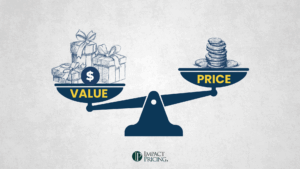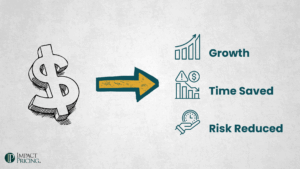
Buyers do not care how many tasks your AI performs or how many tokens it consumes. They care about results. In B2B, results show up as movement in the KPIs that companies already track, and those KPIs ultimately roll up to incremental profit. Outcome-based pricing ties what buyers pay to the business improvements they achieve. It is the closest possible alignment to the value buyers receive.
Outcome-based pricing has always been talked about as the ideal, but it has rarely been used. In the past, software could not measure results well enough, attribution was messy, and vendors did not control enough of the workflow to claim responsibility for outcomes. SaaS companies gravitated toward seats, usage, and subscriptions because those were easy to meter, even if they were weak proxies for value.
Outcome-based pricing is often described as the gold standard, but it is far less common in practice than many believe. Executives admire it, but few companies can support it. Measuring results with confidence, attributing impact, and ensuring the seller has real influence over the outcome are difficult challenges. AI changes the landscape, but it does not eliminate these barriers completely. It simply lowers them enough that outcome pricing becomes realistic in situations where it was impossible before.
AI systems generate detailed logs, performance metrics, timestamps, and data trails that make outcomes easier to observe. They operate inside digital workflows that already track business performance. They are more consistent than human labor, which reduces the variability that makes outcome pricing risky. In many cases, AI performs entire units of work, not just isolated tasks. That makes the connection between AI performance and the buyer’s KPIs far more direct.
Agentic AI makes these connections even stronger. When an agent resolves a case, completes a task, produces a decision, or executes a workflow, the outcome is clear. But this is not limited to agents. Forecasting engines, optimization systems, detection models, and structured workflow automation can all deliver measurable business improvements. The essence of outcome pricing is to charge based on the KPIs the buyer already uses to track progress toward profit. AI finally creates the conditions to support this idea at scale.
What Counts as an Outcome?
Outcome-based pricing works only when the metric reflects the business result the buyer wants. The ultimate outcome in B2B is incremental profit, but buyers rarely agree to pricing tied directly to profit. Profit is sensitive, political, and influenced by many factors outside the vendor’s control.
The next level down is revenue creation or cost reduction. These are closer to the financial truth, but they rarely become pricing metrics. Attribution battles are common, and buyers hesitate to expose internal financial data to vendors.
That is why real outcome pricing lives one level lower, in the KPIs buyers already track for internal performance management. These are proxy outcomes that signal progress toward profit. Examples include conversion rate, cases resolved, average handle time, error rates, cycle time, and forecast accuracy. Buyers already believe these KPIs matter. They measure them consistently, and they understand their relationship to economic value.
This is where outcome pricing becomes workable.
It is important to distinguish outcomes from outputs and usage. Outputs are the work units the AI completes, such as tickets resolved or documents processed. They are better than usage, but they are still product-centric. Usage measures activity, such as API calls, tokens consumed, or compute time. Usage is the furthest away from value.
Think of it as a simple ladder:
- Usage at the bottom.
- Outputs above usage.
- Outcomes near the top.
- Profit at the very top.
The closer the metric is to the buyer’s business performance, the better it is for pricing.
Why Outcome-Based Pricing Is the Ideal
Outcome pricing creates tight alignment between the value the buyer receives and the price they pay. Instead of debating features, activities, or internal workloads, the discussion centers on results that the buyer actually cares about. This reduces buyer risk because payment follows success, not usage.
It also allows the seller to share in the real value created. Usage pricing tends to undercharge when a product drives substantial gains, because the price is tied to system activity rather than economic impact. If an AI product increases win rates, reduces support costs, or accelerates throughput, outcome pricing creates a path to capture a share of that value.
Outcome pricing is also a strong form of competitive differentiation. A company willing to tie price to measurable business results signals confidence. Buyers view this as a safer and more aligned option compared to traditional SaaS models. In markets overcrowded with AI claims, a willingness to charge for outcomes stands out.
Outcome pricing is not easy, but when it works, it represents the purest connection between performance and payment.
Why Outcome Pricing Is More Relevant With AI
AI changes the mechanics of pricing. Traditional software struggled with outcome pricing because results were hard to track or attribute. AI systems behave differently.
AI produces detailed logs, timestamps, and performance metrics automatically. They record exactly what work they perform and when they perform it. This makes outcomes easier to track and verify.
AI also behaves more consistently. Human work varies daily, and that variability makes attribution almost impossible. AI delivers predictable performance, which reduces noise and strengthens the link between product behavior and business results.
AI operates inside environments that already track outcomes. CRMs, ticketing systems, supply chain tools, and analytics platforms all capture KPIs buyers care about. When AI performs work in these systems, outcome data appears automatically.
AI supports faster learning loops. Vendors can test metrics quickly, refine them, and adjust pricing models based on rapid feedback.
AI frequently replaces or augments labor, which is the easiest source of ROI to measure. If the AI performs work a human used to do, the operational improvement shows up clearly in the buyer’s metrics.
These changes make outcome pricing not only more attainable, but in many cases, more natural.
Outcome Pricing Across AI Types
Agentic AI is the clearest fit for outcome pricing because agents complete full units of work. They resolve cases, process documents, update CRM records, and act on behalf of the user. Each of these actions has a direct business impact.
But outcome pricing is not limited to agents.
Forecasting and optimization systems often reduce stockouts, improve yield, or lower inventory costs. These impacts appear immediately in operational KPIs and financial reports.
Classification and detection models prevent fraud, catch defects, and surface anomalies. The value of each prevented incident is real and quantifiable.
Semi-agentic workflow systems automate multi-step processes such as triage, routing, or document extraction. They do not act autonomously, but they complete structured work that maps to KPIs like cycle time or accuracy.
Outcome pricing becomes possible whenever the AI produces improvements that are clear, measurable, and attributable.
Practical Examples of Outcome-Based Pricing
FinAI offers a clean example. Their product resolves customer support calls autonomously. Buyers already track cases resolved, cost per case, and customer satisfaction. Charging per resolved support call aligns pricing with an operational KPI the buyer cares about and trusts.
Sales optimization agents such as Regie.ai have contracts where part of the fee is tied to pipeline generated. Pipeline is a meaningful sales KPI. It signals future revenue, and its movement can be measured directly inside CRM systems. This makes it a workable candidate for outcome-aligned pricing.
Marketing AI also supports outcome pricing when attribution is strong. Sentient Ascend historically priced based on conversion lift. Buyers value this metric because it links directly to revenue. Several modern optimization systems still use performance tiers tied to this signal.
Forecasting and optimization systems like o9 Solutions have used pricing structures tied to improvements in forecast accuracy or reductions in inventory cost. These KPIs are tracked in every operations dashboard and have direct financial implications. When an AI product improves these metrics, outcome pricing feels reasonable and justified.
A familiar analog comes from the legal world. Contingency fee lawyers only get paid when the client wins. This is the purest form of outcome pricing, and the logic maps cleanly to AI. When a product produces clear, measurable business improvements, paying for outcomes feels natural.
Outcome pricing is not theory. It already exists wherever KPIs are measured, trusted, and closely tied to economic performance.
How to Choose an Outcome Metric
The best outcome metrics begin with the buyer’s own KPIs. Any metric used for pricing must already matter inside the buyer’s business. If a buyer is not tracking a KPI, it is almost never a good choice for pricing.
The metric must be measurable. Both parties need access to consistent, objective data. Ambiguity creates distrust. AI helps by operating inside systems that already track performance.
The metric should correlate with incremental profit. You do not need a perfect model, only a belief that the KPI pushes the business toward better financial results. Conversion rate, defects avoided, and forecast accuracy fit this pattern because buyers already view them as profit-related.
Simplicity is essential. Buyers must understand how the metric works and why it matters. Pricing should never rely on complicated formulas or contested assumptions.
Finally, the seller must influence the outcome. The seller does not need full control, but must reliably contribute to the result. If the buyer’s internal processes dominate the outcome, pricing tied to that metric becomes unstable.
A good outcome metric reflects the buyer’s definition of success, can be measured cleanly, and sits close enough to economic value that both sides trust it.
When Outcome-Based Pricing Works
Outcome pricing works when the business environment supports clear and rapid measurement. The best signs are KPIs that change quickly in response to the AI product. When improvements show up immediately and predictably, both parties can trust the connection.
Consistency matters. If the buyer’s operations vary from week to week, the AI’s contribution can disappear into noise. Outcome pricing works best when workflows are stable enough that the AI’s impact is visible.
Outcome pricing also works when data access is straightforward. Many AI products operate inside systems that already track key outcomes. When the buyer and seller can both see the same data, pricing becomes simple to administer.
This model succeeds when the seller is confident in the product’s performance. If the seller trusts the product’s ability to improve the KPI, outcome pricing becomes a way to share in the value created. Confidence prevents overcomplicated contracts and reassures the buyer that the vendor stands behind the result.
Outcome pricing thrives where data is clean, operations are stable, and the solution’s impact is unmistakable.
When Outcome-Based Pricing Should Be Avoided
Outcome pricing collapses when the buyer’s behavior determines most of the result. If the buyer must change workflows, maintain data rigor, or adopt new practices for the AI to succeed, the seller carries too much risk. Even excellent products fail in messy environments.
It should be avoided when the outcome is influenced by many external factors. Market conditions, staffing levels, macro trends, and operational constraints can overshadow the AI’s impact. In such cases it becomes impossible to prove causality.
Outcome pricing also fails when data cannot be shared or when business performance metrics are politically sensitive. Without transparency, the model cannot be administered.
Timing matters. If results appear only after long cycles, outcome pricing becomes impractical. Buyers lose patience, sellers struggle to forecast revenue, and both sides debate causality.
Outcome pricing is also the wrong choice when value is indirect or intangible. Improvements in collaboration, creativity, or brand reputation matter, but they do not make stable pricing metrics.
Outcome pricing should only be used when results are clear, measurable, attributable, and timely. When these conditions do not exist, usage or output pricing is the better choice.
Closing: Pricing the Result, Not the Work
Outcome-based pricing is the purest form of value-based pricing. It connects what the buyer pays to the improvement they achieve. It moves pricing conversations away from activity and toward business success.
It is also difficult. Most companies talk about outcome pricing, but only a small number can execute it. The conditions that make outcome pricing possible do not appear often. AI makes these conditions more common, but not universal. This is why outcome pricing remains the holy grail. It is the ideal, but not the default.
AI gives us new tools to make outcome pricing workable. Detailed logs, consistent performance, and instrumented workflows reveal the business impact more clearly than ever before. Agentic AI strengthens the connection even further by completing full units of work tied to real KPIs.
The goal is straightforward. Align pricing with value, and structure the pricing metric around the buyer’s definition of success. Outcome pricing is the closest we can get to that ideal in a practical, repeatable way.
Share your comments on the LinkedIn post.
Now, go make an impact!
 Tags: ai pricing, pricing, Pricing AI, pricing foundations, pricing metrics, pricing skills, pricing strategy, pricing value