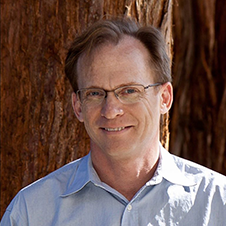
 Bobby Moesta is the President & CEO of The Re-Wired Group, where he helps companies understand why customers buy.He is the co-creator of Jobs to Be Done alongside Clayton Christensen, and has spent decades studying the demand side of innovation—what actually drives people to change, choose, and pay.
In this episode, Bobby joins Mark Stiving to challenge some of the most common assumptions behind pricing and decision-making—starting with how buyers really think (and why it’s not what most companies expect).
They explore what’s actually happening beneath the surface of a purchase decision—and why understanding that can completely shift how you approach pricing.
If you’ve ever felt like your pricing “should work” but doesn’t—this conversation will make you rethink what’s really going on.
Podcast: Play in new window | Download
Why you have to check out today’s podcast:
- Understand why context + outcome determines willingness to pay (not features).
- Learn why buyers don’t “choose” instead they eliminate options and build confidence.
- Discover why most companies underprice by targeting the average instead of high-value contexts.
“Pricing is contextual. It’s based on the context they’re in and the outcome they want.”
— Bobby Moesta
Topics Covered:
02:21 – Why buyers don’t change (until something breaks). The hidden trigger that forces people out of the status quo
04:41 – What buyers actually expect when they pay. Why value isn’t what you think—and where expectations really come from
06:30 – The invisible forces behind every purchase. Push, pull, anxiety, and habit—and how they quietly control decisions
12:13 – How buyers really decide (it’s not what you think). Why people don’t “choose”—and what they actually do instead
18:17 – Why confused buyers walk away. The simple reason deals stall (and how to fix it)
20:06 – What creates buyer confidence. How people convince themselves to finally say yes
23:20 – What “I need to think about it” really means. The hidden signals behind hesitation—and how to uncover them
27:41 – Why one price doesn’t fit all. How context changes what customers are willing to pay
29:37 –Every decision is a purchase decision. Why pricing thinking applies far beyond products and sales
Key Takeaways:
“We can’t convince them of anything. They have to convince themselves.” — Bobby Moesta
“Most of the time we end up pricing at the bottom of the market… and we’re giving away the high end.” — Bobby Moesta
Resources Mentioned:
- Jobs to Be Done – Framework for understanding customer decisions
- The Re-Wired Group – Bobby’s firm focused on demand-side insight
- Demand-Side Sales – Bobby’s book on how customers actually buy
Connect with Bobby Moesta:
- LinkedIn: https://www.linkedin.com/in/bobmoesta/
- Website: https://therewiredgroup.com/
Connect with Mark Stiving:
- LinkedIn: https://www.linkedin.com/in/stiving/
- Email: [email protected]
Full Interview Transcript:
(Note: This transcript was created with an AI transcription service. Please forgive any transcription or grammatical errors. We probably sounded better in real life.
Bobby Moesta
Pricing is contextual. It’s based on the context they’re in and the outcome they want.
[Intro]
Advertisement
Today’s podcast is sponsored by Jennings Executive Search. I had a great conversation with John Jennings about the skills needed in different pricing roles. He and I think a lot alike. If you’re looking for a new pricing role, or if you’re trying to hire just the right pricing person, I strongly suggest you reach out to Jennings Executive Search. They specialize in placing pricing people. Say that three times fast.
Mark Stiving
Welcome to Impact Pricing, the podcast where we discuss pricing, value, and the critical relationship between them.
I’m Mark Stiving, and I help companies see value through their buyers’ eyes.
Our guest today is Bobby Moesta. Here are three things you want to know about Bobby before we start. He is the founder of The Rewired Group, helping companies understand why customers buy. He’s the co-creator of Jobs to be Done with Clayton Christensen, and he’s known for uncovering the demand side of innovation.
Welcome, Bobby.
Bobby Moesta
Hey, Mark. Thanks for having me on. Excited to share.
Mark Stiving
No worries. Hey, I didn’t know. I didn’t have this written down, but I want to make sure everybody knows. You teach at Northwestern, you teach at MIT, you teach at
Bobby Moesta
Yeah, yeah. So I love to help students and the way I stay young is I basically make sure I interact with younger people.
And so I help startups. I’m at TechStars. I’m at Y Combinator. I’m at Northwestern. I help basically the Zell Scholars and then I do executive ed.
So I love to basically share as much as I can all the time. So that’s again, why I’m here.
Mark Stiving
All right.
Thank you. Well, let’s talk about this for a second. You are jobs to be done. So we tend to hire products so that we can make progress.
Bobby Moesta
Yes.
Mark Stiving
I usually say that buyers are trying to make a bet on the future. Are we saying the same thing?
Bobby Moesta
In some cases, yes, but in some cases, no.
So what I would tell you is that buyers, right, so the first thing is that everybody who’s buying something new, so there’s a difference between restocking something, like I’m out of cereal or my tires have worn out and I just want the same thing I had before, that’s actually just what I call restocking.
But when somebody changes, to something new, I’m buying a new ERP, I’m buying a new accounting software, I’m buying a new car, right? The fact is that there has to be a struggling moment in their life that causes them to actually think about it because we are creatures of habit and we would rather just do the same thing over and over.
The lowest risk thing to do is nothing. but it’s really not, right?
And so ultimately the fact is to me is people aren’t really worried about risk, they’re worried about the progress they’re trying to make and that there’s risk associated with it so they’re balancing the risk with the reward through what I call the outcomes and the anxieties.
Mark Stiving
Yeah, so couldn’t I think of outcomes as the future, right?
So I’m going to make a prediction of the future.
Bobby Moesta
It is a future state. You’re right. It is a future state.
So that’s why we’re agreed is like it’s, it’s almost like what, so the way I describe it is there’s a moment of truth where they’re buying, right? And there’s something that caused them to get to that moment to buy.
But the moment that they buy, there’s something they’re hoping for in the future that they can’t do today. And they want to be able to do tomorrow. And so ultimately it’s, that’s where quality and value is actually in from a delivery and expectations are locked in in that moment when they purchase something and they have expectations of what it’s supposed to do for them, whether it can do it or not.
Mark Stiving
Yeah, and so let’s jump back to that moment of friction.
Bobby Moesta
Yeah.
Mark Stiving
Because it seems kind of interesting to me that as I think about this, a lot of people don’t truly articulate or even understand the problem that they’re really trying to solve.
Bobby Moesta
No, no.
So in a lot of cases, the other part is that it’s not symmetrical.
So the problem, for example, the problem is, is it’s too slow. And so we assume that the answer is faster, but the answer might be more, which is very different than faster.
And so this is where all of a sudden you start to realize, one, people will say, I want to go faster, but the reality is like, why now? What’s going on? Well, this is too slow. We have to actually understand that the problem is a two-sided problem. It’s a problem of what they can’t do today and what they want to do tomorrow.
And it’s that they don’t want to do everything. They want to do certain specific things. And so it’s these pairings of context and outcome that determine the value proposition of what they’re willing to pay. Right?
Because it’s how bad are they and how good do they want to be? And what happens is we end up trying to make it as an engineer. What I’ve learned is I was taught to make the best it could possibly be, but it turns out that I don’t have to make it the best. I have to make it meet their expectations, which is very different than the best it has to be.
Think of like QuickBooks.
So I worked on QuickBooks, right? It’s not the best accounting package, but it’s easy enough for people to use it and that they don’t need a hiring accountant.
And so ultimately it’s not about adding all the features and bells and whistles and making it a perfect accounting system. It’s allowing me to actually do accounting.
So when I hire somebody, I can hire another painter. I can hire another groundskeeper. I can hire another, you know, somebody else to run the business as opposed to hiring an accountant to run my part of the business.
And so part of it is the value proposition is this is where you start to realize in pricing value is relative to what is their alternative.
Mark Stiving
Right.
So I don’t want to go there quite yet because I still want to come back to how do we help or do we help buyers understand their problems.
Before they’re going to make a purchase decision because that feels really hard to me.
Bobby Moesta
So there’s two things that I use to help do that.
One is I talk about the forces of progress and the forces of progress is there’s four of them and two of them are fuel and two of them are friction.
So there’s a push of the situation.
So there’s some reason why they’re looking for something that have nothing to do with what you’re selling and has nothing to do with the future. It’s like, why do I need to change now?
And if we don’t understand the causal mechanism behind what’s, what dominoes had to fall for them to even get on the phone with you.
When people say they’re just licking, they’re lying. Right? There’s something there. There’s some void. So my mentor, Clayton Christensen, would say, questions create spaces in the brain for solutions to fall into.
And the reason why that was so important to me is that, like, what question does a prospect ask themselves to say, like, today’s the day I need to buy a new CRM? Like, what is going on that basically does that? That’s what push is all about.
It’s about understanding the context that they’re in. And that’s actually relative to where value is because everything has got to be better than that.
And so pricing is a function of where they are and where they want to go. The second force is what we call the pull force, is what are the things they can do that they can’t do today that they wanna do tomorrow?
And so it’s the outcomes that they’re seeking by putting this new solution in their life.
And so part of it is being able to say what’s pushing them and what’s pulling them and they’re actually connected, they’re not separate.
So you’re not just there to solve a problem, you’re actually there to solve a problem and help them make progress. And it’s more than pain and gain, right?
It’s actually context and outcome, which are very different.
Mark Stiving
Before you jump to friction, can I just say real quickly, one of the things I always say, in fact, my definition of value is that value is the result of solving problems.
And so that’s kind of your push and your pull.
Bobby Moesta
It is, but here’s the difference is context. If I have the problem in one context and I have the problem in a different context, I could value that solution twice as much.
And so context actually plays a role in the problem.
Mark Stiving
And context drives willingness to pay.
Bobby Moesta
Exactly. All of those things. And so if you don’t uncover that, then the fact is you’re missing half of the value. Like most people are giving a price based on kind of what the outcomes are. But if I’m here and I want to get to here, I value it this much.
But if I only want to get here, I only value it that much. And so you start to realize that value is a function of where I am to where I want to go.
Mark Stiving
Absolutely right. And I think of it as individuals. Every individual gets a different amount of value, has a different willingness to pay. That’s right. So if you’ve got a direct sales force, are we actually understanding that?
Bobby Moesta
Well, this is where when I talk to people about pricing, what I realize is they actually offer the same product that does very different jobs to be done, as I would say.
And ultimately, the fact is they should price them differently because they value them differently.
And they’ll say, well, no, it’s easier just to have one product for all these things. I’m like, no, because they don’t know what they can use it for.
And in this situation, they’ll pay three times as much than in this situation. And ultimately, it’s like, it’s kind of like in cybersecurity, trying to convince people about prevention in cybersecurity before they’ve been attacked. It has to be a certain price. They’re not going to pay more than X, but when they’ve been attacked, they’re going to actually value it three times, 10 times more valuable.
And so you have to realize like, though it’s the same product. So who do I price it for?
Mark Stiving
Well, and so the example I love to use in that story is LinkedIn charges recruiters a whole lot more than they charge salespeople or professionals.
Bobby Moesta
Yep. Yep. Exactly. Exactly.
So there’s two forces, which is the push and the pull or the context and the outcome. But the other thing to realize is that there’s friction. Things that hinder people from buying.
And there’s two fundamental friction points.
One friction point is the anxiety of the new thing. If I buy your thing, what am I going to do about this? What do I do about the old contract? What do I do about my data? What do I do about training people? What do I do about…
And so there’s all these anxiety forces. that are playing up, right? That basically come to play and say, like, I want this, but oh my God, there’s just so much friction. The other part is there’s things they have to give up. There’s things they have to stop doing. They have to fire something, because there’s no really new consumption, because we don’t have any more time.
And so if we don’t have any more time, we gotta stop doing something to do something new. What are we gonna stop doing? And you start to realize those two forces are actually the biggest thing.
So if the push and the pull are not greater than the, than the anxiety and the habit people won’t buy. And so I’ve been studying this for 40 years, and I’ve been studying it from everything of buying a pack of gum, to buying software, to finding a therapist, to getting lap band surgery, and building, you know, weapon systems. It’s crazy.
Mark Stiving
Yeah, and so it sounds to me, as you describe the decision, we’re trying to say, how do I get somebody off the status quo?
Bobby Moesta
So you can’t do that. That’s actually a false nature.
They have to convince themselves to get off the status quo.
So what data do you need to provide them to realize that one, there’s either a better way or that they’re actually, they’re complacent about a problem that is like, yeah, it’s just the way it always was.
But what if you didn’t have it?
And so as a salesperson, you have to actually understand how to actually figure out how to uncover those things that are latent, but they have to decide themselves.
We can’t convince them of anything. They have to convince themselves. That’s how I see sales.
So I wrote a book about this called Demand Side Sales, right? And the whole purpose of Demand Side Sales is really about this notion of, there’s two reasons.
One is, how do you go to business school and not learn sales?
Like, you learn everything else, but you don’t learn sales. Like, why is that?
And that’s where, because at some point, they’re thinking of sales as basically a combination of psychology and product or service.
And so it’s, there’s no real theory behind it, it’s a trade. But if you actually study the way people want to buy, and actually understand that, you can end up you know, basically figuring out how you want to sell.
And so the book is really written around this notion of what job are your prospects trying to get done and how do you understand what to tell them, how to actually prod them and actually what information to give them through a timeline of first thought, passive looking, active looking, deciding, first use, ongoing use.
And so it’s this aspect of understanding the forces and the timeline simultaneously to figure out value.
Mark Stiving
Yeah, so what I was trying to tie together there, though, is I think buyers make two different decisions.
The first decision is, will I? Will I buy something in the category? Will I solve this problem?
The second decision is, which one? Which alternative am I going to choose?
And so our salespeople have to be thinking about those two very differently.
One is, how do I get off the status quo? Or am I going to change the status quo?
Bobby Moesta
Yes.
Mark Stiving
And the other is, okay, now what alternative do I choose?
Bobby Moesta
Yep.
And so the first thing is, is my belief is that categories are determined by what I call the supply side of the world.
Buyers actually think cross categories all the time. A pizza competes with a hamburger every day. then they’re completely different categories.
And so you start to realize that there are no categories. The categories are set mostly by financial institutions to be able to judge the profitability of your company versus somebody else who might be in the same business or in a different business.
But consumers don’t shop by category. Right.
And so part of this is to realize that at some point they shop by the problem they have and the outcome they seek. That to me is the ultimate aspect.
And how did you say it is it’s the problem in the future. Right?
Mark Stiving
I said value is the result of solving problems.
Bobby Moesta
Yeah.
Mark Stiving
And I say all buying is a prediction of the future.
Bobby Moesta
That’s right. That’s right. I don’t know if it’s a prediction. I think it’s an expectation of the future, not necessarily a prediction. It’s like, because I can exceed it or I can actually under meet it.
But the fact is it sets the, so another one of my mentors was Dr. Deming and Dr. Deming would talk about quality and that quality is in the eye of the consumer and the customer.
And ultimately, it’s their progress.
So this is where a lot of this thinking came from, is that at some point, you can talk about the ideal consumer experience, but that doesn’t really exist. It’s about what situation do people find themselves in, what outcomes do they want, and ultimately, that determines both price and quality.
So, phew. I get excited, I’m sorry.
That’s why I’m standing, because if I’m sitting down, I literally get myself out of breath.
Mark Stiving
That’s OK.
And so when we go to this will I and which one decision.
Which of those two decisions are they making first or, you know?
Bobby Moesta
I think the ‘will I’ is like, do I want to make progress or not? It’s like, do I need to solve this problem or not? Do I need to make this happen or not? And so my thing is people first zero in on like, is this something I have to do?
And so the timeline basically has first thought.
First thought is about creating the space in the brain that you have to do something about something.
And so this is where I say questions create spaces in the brain for solutions to fall into. And ultimately I said, like I work with Casper mattresses and we just, the question you ask is how’d you sleep last night?
If you slept fine, it’s great. But if you didn’t sleep well, all of a sudden now you’re thinking like, what do I got to do to make that better?
But I don’t have to tell you that I sell mattresses just as how’d you sleep? Like billboards, just how’d you sleep last night?
Because all those people create the space to go like, you know, I should be working on my sleep. And that then gets them into passive looking to say, what can I do?
And what we find is that then people go like, oh, I need to take melatonin. I need to take ZzzQuil. And so one of the things we came up with was how many bottles of ZzzQuil do you need to take before you realize you need a new mattress?
28% increase in sales. Right?
And so the reference point is that they don’t even know they have the problem of a bad mattress because they’re compensating for something else. with something else.
And so this is where you start to realize that you can actually do a lot with it.
And so there’s first thought, there’s passive looking, then there’s active looking, where they actually, I consider it like kids in a candy store. Oh, I want this, I want this, I want this.
And then there’s deciding, and deciding is actually about trade-offs. What are the things you have to give up in order to get?
That’s where they actually work on the value equation, because at some point, everybody will say they want everything, and then they wanna negotiate it down, but ultimately they can’t get it, they always have to make a trade-off, always.
And so what are the trade-offs they have to do? And then when you get to your point of which one, we get to what we call ‘hire and fire’ criteria.
I would hire this one because it does this and this and this, and I would fire that one because it does that and that and that. So now we can start to understand what are the hiring and firing criteria by which I actually sort through my candidates.
And so if I actually go study people who already bought, I can literally then help the next customer go through and basically help them see the trade-offs they have to make.
And ultimately, again, you can’t make the trade-offs. They’re their trade-offs to make.
Mark Stiving
Yeah, so what I’m not hearing you talk about much, and so let me use the mattress example.
I decide that I want to get a new mattress. Now I go look at several different brands and several different mattresses.
How am I making that decision?
Bobby Moesta
Yeah, so this is actually one of the things that we actually found out. How many people want a new mattress but don’t want to go shop for it? It turns out that that’s millions of people. Right?
And so what we ended up doing is realizing the biggest barrier to buying a mattress was going to the store because they didn’t actually know how to pick a mattress.
So we made it basically simple, four sizes, twin, full, queen, king, and then we basically had good, better, best, and we shipped it to your house.
And so you start to realize that at some point in time, by actually making it easier to decide, we didn’t have to build the best mattress, we just had to build a mattress good, because these were the people buying mattresses for their mother-in-law because the guest bedroom had the bed we had from 20 years ago, and it’s time to get a new mattress.
Like, how many of those mattresses are in a home? A lot. And so you start to realize that you have to think about this very, very differently in order to kind of get out.
Because what happens if you go to the mattress firm, right? What happens?
There’s 50 to a hundred mattresses. There’s two people in the back, right? You walk in, there’s nobody there and you don’t know how to pick.
And they come by and say, well, just lie on some, tell me what you think. And it’s like, you know, how is two minutes or 20 seconds going to help me decide to get a better night’s sleep?
Mark Stiving
Yeah.
So another one of my lines, confused buyers don’t buy.
Bobby Moesta
Yes. Confused buyers can’t buy because they can’t make the trade-off.
So ultimately what you want to do is highlight the trade-off that they have to make and say, it’s like, you can either have this or have that.
And they’ll say, well, I want both. You can’t have both.
And if you don’t frame it up, the thing is, is they realize like, I don’t really want it that bad. But the fact is, is ultimately we all have to make trade-offs.
So if you actually prepare your buyer to what are the trade-offs are willing to make.
So this is where most people say they need three bids. What happens is I come back with three really different proposals because they have different trade-offs in them, and they’re able to actually frame what they really want better by saying, nope, not that one, nope, not that one, I’ll take that one.
And so, Dan Ariely really did a great study around basically understanding human choice, and he basically says that people don’t pick things, they eliminate things.
And if you only give them one thing, they have to commit one thing over doing it the old way or doing it the new way, most people can’t make that decision.
But if you give them three choices in the future of what they can do, what happens is you end up saying, like, they look at the three, and the first thing they do is they eliminate one of the three.
Like, oh, I don’t want that one. But that one actually gives them endorphins because they actually have confidence that they don’t want that one. And so the two that are left, they don’t compare to each other. They compare to the one that they made the decision about and they eliminate the closest one to the one that they eliminated. And they’ll say, yeah, if it’s A, B and C, I eliminate B.
OK, so we’re down to A and C. It’s like, well, C is closest to B. I’m going to take A.
And so it’s like they’ll say, I’ll take A. But they really didn’t choose A. They eliminated B and C.
This is 40 years of just studying why people buy shit.
Mark Stiving
Yeah, yeah, yeah.
I have to say that I rarely have huge aha moments when I have these conversations, and you just gave me a great aha moment.
Bobby Moesta
Which was what? Tell me.
Mark Stiving
And that is this, that I believe wholeheartedly that buyers make predictions of the future, and when they finally make the purchase, it’s because they’ve got enough confidence in the decision they’re about to make. So they’re trying to build up confidence.
And so if I give you good, better, best choices and I make it obvious that you can eliminate good and best, I just made you more confident that this is the right solution.
Bobby Moesta
Exactly. But part of it is they have to make the decision. I can’t convince them of anything. And people are like, so I’ll be sitting with a sales team, they’re like, they’re never going to take option A. Why are we even presenting it?
I’m like, because it becomes a reference point for them to realize to say no. I got to get him to say no to say yes.
Mark Stiving
Yeah. I’ve always said good, better, best works because people are afraid to make a mistake.
They think the good is is not going to be good enough and best they’re wasting money.
And so I buy the one in the middle.
Bobby Moesta
This is where it depends on the context and the outcome.
Sometimes it’s like if it’s for me and for the way I want to sleep, I want the best because at some point I’m going to have that mattress for 20 years.
And so I’m willing to spend the best, but I got to know where I sit in the good, better, best.
And to be honest, I got to know what I got.
And sometimes it’s like, yeah, this is for my kid who’s going to grow out of it in three years.
You know what? I’m just going to get the good one. And so you start to realize, like, it’s not their choices are like, I can’t predict their choices, but I can actually understand their context and their outcome and build to those things.
And then people will self-select into one of the three. But like you said, they need a reference point. They need to know what the best is to buy the good. They need to know the good is and the best is to buy the better.
Mark Stiving
Yeah. These are great. These are great.
So salespeople, I always hear salespeople say don’t sell features, sell benefits.
Bobby Moesta
I say sell outcomes. So my thing is the benefits are too high. They’re too abstract.
Live a better life. No, sleep eight hours. You can say that’s a benefit, but that’s the outcome people are looking for, like feel rested, right?
And so my thing is, is what is the real outcome they’re trying to get?
Because some people want a mattress so they can sleep longer. Some people want a mattress so they can sleep less. Make me sleep so well that I can now sleep six hours instead of eight.
And so if you say sleep longer, then you actually just eliminate those people. Yeah.
And the features themselves, most people don’t know what they are. You end up needing a feature, but the fact is the feature is the reason to believe that you can get them to this outcome.
And you need to lead with outcomes and or benefits and then have backfill with features because if they don’t buy into the outcome, they have no idea what the feature means. 90% of the time, they have no idea what that feature is.
Mark Stiving
Yeah. I often think the features are just proof points that we can deliver the solutions that we can deliver.
Bobby Moesta
Well, and they’re usually written in our language, not their language.
And so they don’t even understand what is, I got anti-lock brakes. What does that even mean? And by the way, when they go off, they scare the shit out of you.
Mark Stiving
So, okay, slightly changing topics.
Imagine that you’re in a sale situation, you’ve been selling for a while, this one deal that’s going on, and the buyer says to you, well, let me think about it.
What do you think’s going on inside their head?
Bobby Moesta
So my approach is help me understand what you need to think about. Is this about a trade-off? Is this about trying to look at other people? Like what’s the thinking part of this about?
And the thing is, is most salespeople don’t wanna ask what’s the thinking about.
And to be honest, this is where you can say, let’s pretend you thought about it. What are the five things you’d think about? You need to actually probe into it because it’s information and typically what thinking about it is, is what we call anxiety forces. Those anxiety of the new is like, God, how am I gonna convince my boss of this? How am I gonna do this?
So the thinking is maybe something that you can help them with, but they don’t even know you can help them with it, right?
And so part of it is to actually, so I talk about there’s layers of language. There’s what I call the pablum layer. The pablum layer is where it’s a generic way to say something, and you can interpret it a thousand ways. Thinking about it is one of those pablum words. I need to think about it.
And then you say, well, what do you need to think about? The next layer down is what I call the fantasy nightmare layer. This is where people exaggerate what happened or what’s going on or what they want out of it. And they exaggerate it to a T and say like, I need it to work 100% of the time, blah, blah, blah, blah, blah.
And then you get to this, well, what happens if it breaks? Like the next layer down is the causal layer. You have to actually get people down to this causal layer to say what causes them to actually make that progress or choose to make that thing. And so to me, you have to take that problem word of thinking about it, get past the problem layer and get down to say, what are the things you need to think about and what are the decisions you need to make?
And if I can help you frame those decisions, all of a sudden I’ve made it easier for you. I framed the trade-offs.
Because that’s what they’re trying to think of. So it could be they’re thinking about trade-offs. It could be they’re thinking about anxiety forces. It could be that they’re thinking about other competitors and they need to get things together.
There’s 20 things that thinking about it could mean. And so if I don’t actually probe into it, then I don’t know what that means.
And so one way I would do it is I’ll say like, when people tell me, think it over, there’s three responses.
One is you gotta go talk to a bunch of competitors. I appreciate that. You gotta do that.
If that’s the case, let me know.
If it’s like, I gotta figure out how to sell my boss, let’s talk about that. I might be able to help you think through that.
Or the fact is you’re trying to actually make a decision of when to do it and who’s gotta be involved.
I can help you with that too.
So help me understand what ‘think it over’ means and give them examples.
And again, they’ll eliminate the ones that aren’t real. It’s really, really powerful.
Mark Stiving
Great answer.
It seems to me that when people say that, what they’re really saying to me is that they’re not confident in their decision.
And I think what you just did was say, look, here are the half dozen different places where they’re probably not confident.
Can we go figure that out and help them through it?
Bobby Moesta
That’s right.
So confidence is an outcome. Confidence is cause. You cause confidence.
And so you need to understand what are the things you need to do to cause confidence.
So I can’t just give, it’s like trust. People say you gotta, we need trust. I’m like, do I need trust coming in? Or what are the things I gotta do to cause trust?
And you start to realize when people say, oh God, you know, I just trusted the salesperson.
There’s things that they did because they’re a new person, but there’s certain things, they showed up on time, they took really good notes, they asked me great questions, they did like, what causes trust?
And so part of it is to actually understand that, like what causes confidence?
And our job as both a salesperson as well as a product company is to build confidence, but we need to know what it is that causes confidence in them because it’s not the same thing that causes confidence in us.
Mark Stiving
Yeah, nice, nice.
Bobby Moesta
So, I have a separation between what I call the supply side of the world, which is the way the business works, and the demand side of the world, which is the way people pull new products and services into their lives.
And they’re actually two completely different languages. And if you don’t understand those two different languages, you speak your language to them and they don’t understand a word you’re saying.
Mark Stiving
I couldn’t agree with that more. That’s awesome.
Bobby, we are out of time, but I have to ask you the final question.
Bobby Moesta
Yeah.
Mark Stiving
Although you’re not a pricing person. What is one piece of- No, no.
Bobby Moesta
I had to ask you, like, I don’t know pricing people. What is a pricing person? You’re like, you don’t know what a pricing person is?
I’m like, I know a product person and I know a salesperson, but like, I’ve never heard of a pricing person.
And I worked at Ford.
And then you explained it to me. I’m like, oh, that’s the revenue management people.
So it’s just different languages. But yes, I’m not a, quote, I’m not a pricing person.
Mark Stiving
No worries. No worries.
But what is one piece of pricing advice you would give our listeners that you think could have a big impact on their business?
Bobby Moesta
So the thing that I will tell you is that pricing is contextual.
It’s based on the context they’re in and the outcome they want. And if you try to come up with a standard price, the reality is, is you have to make sure that you’re not, most of the time we end up pricing at the bottom of the market. because at some point that’s where the volume is.
And the reality is like at some point, find those places where the context where people value your product more and the outcomes that people value more and actually understand if you can actually have multi-tier pricing.
Because I feel that there’s a lot of money that people are giving away because they’re trying to price to the lowest common denominator of where the volume will come from, but they’re giving away the high end of the market.
Mark Stiving
That was such a good answer. I will let you call yourself a pricing person, Bobby.
Bobby Moesta
Thank you. Thank you. I’ll add that to my title. That’s good.
Mark Stiving
Yeah. Thank you so much for your time today.
If anybody wants to contact you, how can they do that?
Bobby Moesta
LinkedIn’s the best place. It’s Bobby Moesta, M-O-E-S-T-A. I’ve done a couple of books.
One is called The Demand Side Sales. I’ve done another one that is on how to build, Learning to Build. It’s a book about basically how I’ve worked on 3,500 different innovations.
And I’m dyslexic and ADHD on the spectrum. And so you start to realize, how does an illiterate 18-year-old go from being told to be a construction worker to literally be an innovator?
And so it’s that process of going through that.
And then I wrote another book called Job Moves, which is about, I’ve studied basically over the last 15 years, people switching careers and what causes them to say, today’s the day I’m gonna leave this company and go to that company.
Well, it’s again, you’re actually hiring another company and you’re buying a company to actually go work at.
What’s going on around this company that’s causing you to leave and what are you hoping for when you go to the new company so you can be explicit about managing your career?
Mark Stiving
You know what I love about what you just said, Bobby, is the fact that it turns out almost every decision looks just like a purchase decision.
Bobby Moesta
Exactly. Exactly.
Everything is a purchase.
Whether I decide who I’m going to marry, whether I’m going to go on vacation, what job I’m going to go take, what school I’m going to go to, they’re all purchasing decisions framed in the sense of what progress are you trying to make by adding this to your life?
Mark Stiving
Yeah, it’s great.
So to our listeners, thank you for your time.
If you enjoyed this, would you please leave us a rating and a review? And if you have any questions or comments about the podcast, or if you want to see value through your buyers’ eyes, email me, [email protected]. Now, go make an impact.
Advertisement
Thanks again to Jennings Executive Search for sponsoring our podcast. If you’re looking to hire someone in pricing, I suggest you contact someone who knows pricing people. Contact Jennings Executive Search.
[Outro]