Every pricing conversation eventually lands in the same place. Charge what a buyer is willing to pay. It sounds simple. If you can figure that out, pricing is solved.
But willingness to pay is not stable. It changes across buyers, across situations, and even within the same deal. That’s because:
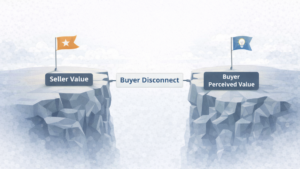
The real driver is value, specifically value as the buyer sees it.
Two buyers can be presented with the exact same offer and walk away with completely different interpretations. One sees a problem that needs to be solved now, while another sees something that can wait. One believes the outcome will happen, while another questions whether it will work at all. One can clearly justify the decision to others, while another struggles to defend it.
Same offer. Different value. That is what changes willingness to pay.
Willingness to pay reflects what the buyer can see, believe, and justify about the value they expect. It is not anchored in your product. It is anchored in their understanding of what will happen after they choose it. You are not pricing a product. You are pricing how a buyer interprets value.
Most pricing strategies break down. They assume value is obvious, that buyers will recognize it, and that better products naturally lead to higher prices. But value does not live in the product. It lives in the buyer’s understanding of their future.
When that understanding is weak, willingness to pay drops. When that understanding is strong, willingness to pay increases. The product has not changed, but the interpretation has. That is why pricing feels inconsistent. But it is not random. It reflects how differently buyers interpret value in their own situation.
Two buyers who look identical on paper will pay different amounts. The same buyer will decide differently depending on context, urgency, and what else is competing for attention. Those differences are not noise. They are signals about how well the buyer understands what they are buying.
If you want to improve pricing, don’t start with price. Start with the buyer, not who they are, but how they see value.
Share your comments on the LinkedIn post.
Now, go make an impact!
 Tags: buyer perception, buyer value, pricing, pricing value, value, value perception, willingness to pay