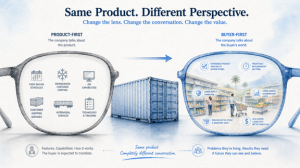
What if your customers aren’t really buying your team’s time, equipment, or technical expertise? What if they’re buying the problems you solve and the results you deliver?
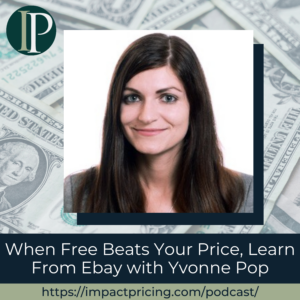
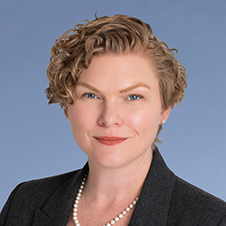
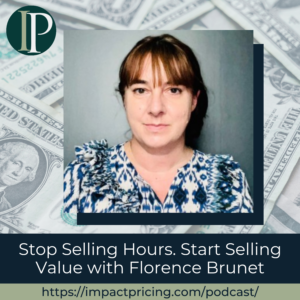
Florence Brunet, Pricing Director and Head of Group Pricing Performance at Equans, is leading a pricing transformation to move an engineering-driven organization beyond traditional cost-plus pricing toward value-based pricing.
In this episode, Florence explains how to help engineers sell outcomes instead of hours, quantify customer pain, and build confidence in charging higher prices. She also shares how customer value, ESG commitments, and project profitability influence pricing decisions in complex B2B projects.
**The next opportunity to meet Florence Brunet in person will be at EPP 20 Years Global in Amsterdam on 17–18 November. Register here to secure your ticket.
Podcast: Play in new window | Download
Why you have to check out today’s podcast:
- Learn how to move beyond cost-plus and sell the value your projects create.
- Discover how customer questions help quantify pain, savings, and willingness to pay.
- See how to justify premium prices even when competitors charge less.
“Instead of selling hours of technician, engineer, and instead of selling equipment, here we talk about what we create for customers.”
— Florence Brunet
Topics Covered:
02:00 – Stop Selling Hours. Start Selling Value. Learn why customers should pay for the outcomes you create, not simply technician hours, engineering time, or equipment.
10:00 – Building Confidence to Charge Higher Prices. Explore how workshops, a value toolkit, and deal-scoring tools help engineers justify higher prices.
12:00 – Why You Can Win Without Being the Cheapest. Discover how ESG commitments, local teams, and responsible business practices can strengthen your value proposition.
16:00 – Protecting Profitability After the Project Is Won. Learn how Equans monitors margins, manages contracts, and identifies opportunities to recover profitability during execution.
17:30 – The Pricing Advice: Know Your Customer. Florence shares why customer segmentation and understanding customer needs should guide pricing decisions.
Key Takeaways:
“Be customer-centric, knowing who are your customers, your segment, what are their main needs.” – Florence Brunet
“Sometimes we are not the cheapest, but we win because of this.” – Florence Brunet
“We should cover our costs, it’s the bare minimum, but taking into account the context and the value we are providing is also important.” – Florence Brunet
People and Resources Mentioned:
- Equans – Florence’s company, operating in energy, digital, and industrial transitions.
- ESG – Environmental, social, and governance considerations that can contribute to a company’s value proposition.
Connect with Florence Brunet:
Connect with Mark Stiving:
- LinkedIn: https://www.linkedin.com/in/stiving/
- Email: [email protected]
Full Interview Transcript:
Read the full transcript for more insights from Yvonne Pop and Mark Stiving.
(Note: This transcript was created with an AI transcription service. Please forgive any transcription or grammatical errors. We probably sounded better in real life.
Florence Brunet
Be customer-centric, knowing who are your customers, your segment, what are their main needs, because it’s so much easier then to take the best decision when you really know where you can create the value for them.
[Intro]
Advertisement
Every year, the best pricing and commercial strategy minds in the world find each other in one place. This November, that place is Amsterdam. EPP is celebrating 20 years by bringing 1,000 pricing and RGM leaders together for its global summit, November 17th and 18th. If pricing is your profession, this is where you belong. Register at pricingplatform.com.
Mark Stiving
Welcome to Impact Pricing, the podcast where we discuss pricing, value, and how buyers decide.
I’m Mark Stiving.
Our guest today is Florence Brunet. She is Pricing Director and Head of Group Pricing Performance at Equans. She has more than a decade of pricing, strategic marketing, and revenue management experience in several companies. And she’s speaking at EPP Pricing and Revenue Growth Management Summit in Amsterdam. And she’s going to talk about price transformation there. All right.
Welcome, Florence.
Florence Brunet
Thank you for the invitation, Mark.
So yes, I’m very happy to be in Amsterdam to talk about Equans Transformation. So Equans is a very new company created five years ago. And so it’s very exciting to create the pricing function within this company with a lot of challenges about transition. So energy, digital and industrialization transition.
And of course, there is a lot of challenges as a pricer because the currency is new. At the same time, it’s a very decentralized company. So decision is made at a very low level. Each agency can decide his own strategy.
Mark Stiving
Before we jump into Equans, I have to ask the really important question. How did you get into pricing?
Florence Brunet
It was really by chance. I don’t know how to say this. I think my first job, I was doing pricing without knowing it. I was doing a cost plus.
So I have a cost and I add the margin and we give the price to the regions. But I didn’t know it was pricing. And then I came to telecoms and there I learned a lot about pricing, willingness to pay, elasticity studies, things like that.
And that’s where I really began to be a pricer, I think.
Mark Stiving
Nice.
And so at Equans, you guys do big projects. And it feels to me like when companies are doing big projects, cost plus just makes a lot of sense. And so many companies rely on it.
First off, how do you do value based pricing for big project? And secondly, how are we going to get the company to shift that direction?
Florence Brunet
So, of course, we have an engineer culture, so Cost Plus is the bible for pricing. But then I try to give them other point of view and a way of calculating their price to be more confident with higher prices.
So first of all, I try also to explain them that they can use data just to have a more competition price to be more confident with the level of price they can propose to customers. And then, of course, I explained that the cost plus is just to cover our risk and just to be sure that we cover our cost.
But there is another thing that customers are buying, and it’s value. and so instead of selling hours of technician, engineer and instead of selling equipment, here we talk about what we create for customers and of course it’s really a different message and the customer won’t never say the value is too much or not enough.
And because customers say, okay, the price is too high, but when you explain them what value you are creating for them, then the way of selling is really different.
So it’s not so easy because they are not so easy for them to have this value message, but I’m trying to convert them to this.
Mark Stiving
Okay, so see if you can convert me.
First off, I understand how easy it is to figure out what our costs are. I mean, even though all of our costs are going to come in the future, we’re still making estimates. Here’s how many hours we think it’s going to take, or here’s the equipment or materials we think it’s going to take.
So we’re making estimates on our costs, and I want to make sure I cover my costs.
So here’s the hard question. How do I make estimates about my buyer’s value? How do I decide what value they’re actually getting from my product?
Florence Brunet
Yes, that’s the most difficult part. What I ask them is to ask questions to their customers. And just knowing what are their issues, how much pain it gives them and how they can value its pain is part of the answer.
Because when you do, for example, a building renovation, you know how much the building was consuming in terms of electricity or CO2 tons.
And then you know that with your project, they will gain They will have less costs on electricity, for example, and you can calculate this difference in value.
And then it can be part of a value created for the customer. And it’s easy to estimate when you know what exactly is painful for the customer.
Mark Stiving
Right.
And so what we want to do is figure out what the customer’s big problems are. and then help them quantify them and figure out what it’s worth when we solve those.
And so I get that completely, but let’s say I’m building a building. And so you can make my building more energy efficient, but that’s like a tiny, tiny piece of building the building.
I would, you know, I’m going to spend a gazillion dollars buying a building and I don’t even know how much it costs to buy a building.
Florence Brunet
Yeah. So in that type of issue, we can have different scenario saying, okay, we can build perhaps the cheapest building.
But if you want to have a CSR consideration, if you want to be self-sufficient, then we have this other scenario, but it’s not the cheapest one.
But in this case, within, I don’t know, three, four, five years, your ROI will be better. So it’s also an investment of course, but in front of that you will have different value.
And if we show you that you can have a very simple building without any technology or things like that, but on the opposite side you can have a better way of monitoring your building, perhaps you will be interested.
But we show you how much value we create in each scenario. And we can also, I don’t know, propose you to visit another building that was built with this technology, for example, and it will show you concretely what the value is.
Are you convinced?
Mark Stiving
I’m sure, I’m absolutely positive that you walk into an engineer’s office and you say, hey, we want you to ask more questions and then they just do it for you.
Florence Brunet
so easy. So I work not with the purchasing team, for example, just to challenge the engineers on the way they are selling their offer. And it’s really helpful because the buyer will say, okay, we need this as a proof of evidence. We need this. And it’s very helpful to understand.
And then they say, okay, but we don’t know what the customer really want and we are not clear enough on this topic. And then it’s easier to give them a list of questions that they should ask for each type of project. And then we try to ask this question.
Mark Stiving
And those questions are all value related. What’s the pain? What’s the problem? Not technology or product related.
Florence Brunet
They already know, they already have the technical question. The only thing they need now to develop is more about value.
Mark Stiving
Okay, I find it easier to solve the problem, as in provide the right technology, after I understand what the problems are, than try to say what were the problems we solved with the technology we just gave you.
Florence Brunet
Yeah, it’s a reverse way of thinking because most of the time people say, okay, here is our solution catalog and we can do everything, but it’s not perhaps what we need.
So reverse, first of all, need and then adapt, refer to what they need, but it’s worthful to do this, to reverse this way of working.
Mark Stiving
Yep. And so what techniques or tricks do you use to help build confidence in your engineers that they can get a higher price, that they can talk about value?
Florence Brunet
So I use many tools.
So I’m doing a lot of workshops because they need to live it concretely and do as many webinars. If they don’t live it, it’s difficult. And then, so there are many ways.
So I’ve created the value toolkit where they have all the things that legitimate them to try higher prices with value objections, how they can also estimate the value.
Then also I have added more scoring that helps them to say okay in this context I can higher because and they will be more confident because if they figure and the net margin they can reach, if there is less competition and things like that, then it’s easier, of course, to have higher, I will say, training.
Mark Stiving
Nice. And so what kind of resistance have people pushed back on you with?
Florence Brunet
So most of the time we have internal and external objections.
Internal is probably we have too much too high SG&A so we can’t be competitive compared to small companies.
It’s also if we raise our price we will lose customer, we will lose volume. They also say that they are not sales people so they don’t want to seem squeaky and things like that.
And so most of the time I always have the same answer and of course the competition is too high in my market so I can’t get more price.
Mark Stiving
It’s hard to get competitive pricing in large project type business to see what’s happening there. But have you gotten any big surprises as you do these projects? Anybody just shock you?
Florence Brunet
Yes, sometimes.
So I also ask them to know what the scoring of this deal is really. Because sometimes, of course, as we are premium, our price are higher. But as we have a lot of CSR points and things like that, as we are very engaged in this type of ESG and things like that, so we gain more points because we work cleaner than our competitors.
So it’s part of the value, because it’s not only the price and what we are providing, but when we are able to explain what we are as a company, and how we treat people, and how we respect the law and things like that, of course it’s very important also for customers.
And sometimes we are not the cheapest, but we win because of this.
Mark Stiving
Yeah. And that gives you the ability to actually communicate your value, right? You’re selling the value of what you do, which is, which is amazing.
Florence Brunet
And we try also to, to be very engaged locally.
So we show also the team that will work for the customer, but are very local people. We also try to have to work on all the ESG part. because it’s part of our offer. It’s not only the technical part that is important, but also what we are doing globally.
Mark Stiving
Nice. So I’m going to reverse the story for just a second.
And you may or may not understand this or have an opinion about this, but you’re taking your company and trying to get them to move away from cost plus into value based pricing.
There’s a gazillion SaaS companies out there today that don’t do cost plus because they have no costs. And now they’re adding AI and suddenly they have costs and so many of them are shifting to cost plus, right? They’re shifting to pricing their tokens instead of pricing the value of what they have.
Do you have any advice for these companies or any thoughts for these companies?
Florence Brunet
I think it really depends on the context, but using I think different methodologies is very interesting because of course we should cover our costs, it’s the bare minimum, but taking into account the context and the value we are providing is also important.
So I think this balanced approach with two or three methodologies is very important just to be sure that we don’t miss anything and that we have these different approaches that will help us to have the best price and to be confident with this price.
Mark Stiving
Yeah, so let me ask about individual jobs for a second. What do you do, this is true for the AI companies, it also should be true for you, but you bid and you assume you’ve estimated your costs.
And I’m going to say the costs were estimated to be a million dollars. And so we bid a $2 million project and the cost actually came out to 2.1 million. But that was one project.
And over time, we actually make profit on all the projects, right? On average.
So do you guys look at the average profitability or does losing money on a single project just throw everything into haywire?
Florence Brunet
So we follow two main KPIs.
So the first one is the difference between the margin sign compared to our strategy.
And this one is very important because we don’t allow so much to lower our prices. And then there is a second KPI that is how much we realize compared to margin sign. And so we have created a cockpit to monitor what is happening during the project.
Because of course it’s not a simple line and sometimes the margin decreases and it decreases. So we also try to train people to gain more margin during the project. by adding additional work, for example, by doing claims, things like that, and really to challenge every day what is happening.
Because, of course, if we don’t manage the contract very well, we will lose margin of the contract.
And, of course, we also deal with all the inflation risk and the exchange risk.
Mark Stiving
You guys have all… Once you bid a price, you have all the inflation risk. So that’s pretty tough, pretty tough.
All right, Florence, this has been a lot of fun, but I want to ask you one final question.
What is one piece of pricing advice you would give our listeners that you think could have a big impact on their business?
Florence Brunet
I think it’s really be customer-centric, knowing who are your customers, your segment, what are their main needs, because it’s so much easier then to take the best decision when you really know what can create the value for them.
So segmentation.
Mark Stiving
I absolutely love that answer. We should all be customer-centric, right? We should all be thinking about the buyers before we do anything else.
All right, Florence, thank you so much for your time.
If anybody wants to contact you, how can they do that?
Florence Brunet
So they can contact me in LinkedIn and I’d be very happy to answer them.
Mark Stiving
Nice, and we’ll put the URL in the show notes.
And to our listeners, thank you for your time. If you want any more information about this podcast or about pricing in general, or if you’d like help seeing value that your buyers can’t see, feel free to email me, [email protected].
Now, go make an impact.
[Outro]