You can listen to the full audio version of this blog we call — Buyer Insight.
Most pricing experts want to know what buyers are willing to pay. So they measure it. Van Westendorp asks buyers directly about price thresholds. Gabor-Granger tests purchase intent at different price points. Conjoint analysis infers preferences from tradeoffs. These are legitimate tools. But they all share the same assumption: WTP is a fact to be discovered.
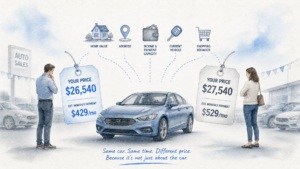
It isn’t. WTP is a decision. And decisions can be shaped.
To me, the most useful method for understanding WTP is Economic Value Estimation. EVE starts with the next best alternative and builds up from there, quantifying the value of every meaningful difference between your offering and the competition. It forces you to think like a buyer evaluating outcomes rather than a researcher collecting data points. That shift in perspective is critical. Because once you understand what drives WTP, you can move it.
Segmentation is the first lever. Different buyers have different problems, and different problems produce different WTP. When you identify which segments have the most to gain from solving a specific problem, you stop averaging across your market and start targeting the buyers whose WTP is already highest.
Packaging is the second. How you bundle capabilities determines which problems feel solved and which don’t. A buyer who sees their specific problem addressed in a package has higher WTP than one who has to mentally assemble a solution from a list of features.
Pricing models shape WTP in a subtler way. When your pricing metric aligns with the value the buyer receives, every unit of usage feels like a return rather than a cost. That alignment makes the price feel smaller relative to the outcome.
Selling value is the most direct lever of all. When your salespeople help buyers understand their own problems more clearly, calculate the cost of staying put, and picture the specific KPIs that will move, WTP rises.
Every company shapes WTP whether they realize it or not. Every segmentation decision, every packaging choice, every pricing model, every sales conversation either helps buyers see the value of solving their problem or makes it harder. The question is whether you are doing it intentionally. Companies that don’t think about it this way don’t create bad products. They create Buyer Disconnect. They make it harder for buyers to see the value they actually deliver.
Stop measuring willingness to pay. Start shaping it.
Share your comments on the LinkedIn post.
Now, go make an impact!
 Tags: buyer, buyer commitment, buyer hesitation, commitment gap, problem clarity, relative value, sales, sales commitment, value