Buying a Car
You pull into the lot. Before you reach the door, someone has looked at what you drove in on and formed an opinion about your budget.
Inside, the questions start. Have you been to any other dealers today? What are you driving now? Are you trading it in?
Then the important one. What kind of monthly payment are you comfortable with? That question tells the salesperson how you think about money, how much room you have, and whether you are shopping on total price or on cash flow.
Then they need your address for the paperwork. With an address, anyone can look up what your house is worth, what you paid for it, and when you bought it. Public record. Thirty seconds. No special tools.
None of that is about the car. They use all of it to decide what to charge you. You gave up your budget without meaning to. You gave up your net worth without being asked.
By the time you sit down at the desk, the number on the paperwork is partly about the car and partly about you. Two people can buy the same vehicle on the same afternoon and pay $1,000 apart. Neither one knows.
We have been doing this since the 1920s. No algorithm required.
The FTC Just Called This a Problem
Last week the Federal Trade Commission proposed a policy statement on what it calls surveillance pricing. The vote was 2-0. It is open for public comment.
The core claim: when a company uses your personal data to set the price it shows you but does not tell you, that can be an unfair or deceptive practice under the FTC Act. Chairman Andrew Ferguson framed it as an expectation problem. When you see a listed price, you expect it to be the price everyone sees, not the seller’s estimate of what you personally will pay.
The FTC did not ban personalized pricing. Ferguson said plainly that the agency lacks the authority to do that. What the proposal requires is disclosure. Tell buyers that you are personalizing and what data you are using.
The examples in the proposal are deliberately uncomfortable. A delivery company quoting higher prices to people it believes cannot easily leave home. A grocer charging more for milk based on how many children live in the house. A rideshare app charging more to someone who does not have a competitor’s app installed.
I have used that last one in bootcamps for years as a hypothetical. It may not be hypothetical anymore.
In a showroom, you know you are negotiating. On a website, you think you are getting the same price as everyone else.
Someone Already Tried One Price
In 1990, General Motors launched Saturn with one price. The sticker was the price. Everyone paid it.
A local news crew visited a Saturn dealer in Indianapolis in 1992. One customer, a woman replacing a car with more than 100,000 miles on it, explained why she was there. She had dealt with salesmen raising the price on her because she was a woman. At Saturn she could look at the number on the door and pay it.
She was not saying the price was low. She was saying the price was not about her.
Saturn made it work because GM gave each dealer an exclusive territory. A Saturn retailer could hold the line because the customer could not drive four miles and find the same car for less. Remove the pressure to undercut, and the discipline holds.
Then the market moved. Discounts grew everywhere else. By 2007, a buyer could compare a Saturn to a nearly identical GM cousin and find the cousin selling near invoice, more than a thousand dollars below the Saturn. When every competitor’s list price became fiction, the company telling the truth looked expensive.
Yet, an Autotrader survey found that 56% of car buyers, including millennials and women, want to negotiate. Their reason: they do not trust flat-rate pricing, and they feel they have to negotiate to get a fair price.
Buyers say they hate haggling. Then they say they cannot trust a price they did not fight for.
Two Sides
To be clear, I work for sellers.
Companies hire me to help them capture more of the value they create. That is the job. My core belief has not changed in twenty years of doing this: charge what a buyer is willing to pay. That is the single foundational concept of pricing.
If you hired me to represent buyers, I would tell you something different. I would tell you to demand disclosure, shop in a private browser, compare across sellers, and never answer the monthly payment question. That advice would be correct. It is simply a different job.
So here is my position from the seat I actually occupy.
Play by the rules. Whatever the FTC finalizes, comply with it and optimize inside it. Sellers who treat compliance as an afterthought pay for it eventually, and those who read the rules early find the room they leave open.
Manage perceived fairness, especially on anything a buyer purchases repeatedly. Fairness lives in the buyer’s head, and it responds to framing far more than to arithmetic.
In 1999, Coca-Cola’s CEO told a Brazilian magazine that a cold Coke is worth more on a hot day, so it is fair that it should cost more. The company was testing vending machines with thermometers inside.
The reaction was savage. Editorial boards called it gouging. One industry executive asked whether the next machine would x-ray your pockets to count your change. The CEO was gone within a year.
Now imagine the identical machine, described differently. On cold days, Coke costs a quarter less.
Same thermometer. Same price schedule. Nobody writes an editorial about that one.
Tell a buyer why someone else got a discount, and they will usually agree with you. Tell that same buyer why they personally got charged more, and you have a very different conversation.
Disclosure, Not Prohibition
The FTC chose disclosure over a prohibition on surveillance pricing. Consumer advocates have already said they want the stronger version, and there is a bill in the Senate that would outright ban the use of personal data to set individual prices.
Sellers should want the disclosure version. So should buyers.
Consider what happens when you remove segmentation. A seller facing a single market sets a single price. It will be the price that optimizes across the entire distribution, which will be above what the most price-sensitive buyers were paying. Those buyers do not buy.
We know sellers behave this way when their hands are tied. Look at most-favored-nation clauses and price-match guarantees. Both look like consumer protection. Both serve as a commitment not to compete, because matching a rival’s cut removes the rival’s reason to cut at all. Constrain pricing flexibility, and prices tend to rise.
Segmentation is what makes low prices possible for the people who need them most. Student rates, senior discounts, off-peak fares, and AIDS drugs sold in Africa for a fraction of the American price all exist because a seller was allowed to charge different people different amounts. Americans pay more for those drugs, and Americans know it. Almost nobody calls it unfair. If they had to pay the American price, Africa would buy nothing.
The FTC left segmentation alone. It went after concealment. That is the right target.
The Version I Would Defend
My core belief is to charge what a buyer is willing to pay.
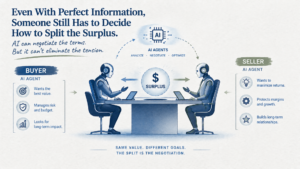
If that feels too blunt, here is a version I can defend: charge what a buyer would be willing to pay if they had full information.
Full information about their own situation. What the thing is worth to them, what their alternatives actually are, and how their price was chosen. If a buyer knew all of that and still said yes to your price, you priced well.
Every good fence passes that test. The enterprise customer paying more for more capacity knows exactly why. The traveler who booked late knows why. The buyer who took the volume discount knows why. Tell any of them the reason and the sale still closes.
Run the FTC’s examples through the same test, and they fail immediately. Nobody publishes “your ride costs more because you have not installed our competitor’s app.” The reason it stays hidden is that saying it out loud destroys it.
Now the uncomfortable part. I would not adopt that standard on my own.
If I disclose and my competitor stays quiet, my competitor wins. They capture the margin I left on the table, and no buyer ever learns the difference. That is what happened to Saturn. The company telling the truth looked expensive next to companies whose prices were fiction. Holding the line alone is not integrity. It is a slow way to lose.
Which is the argument for a rule. A standard that only the honest follow punishes the honest. Make disclosure mandatory, and the honest seller stops being the sucker because the competitor who conceals is breaking a rule rather than simply being more aggressive.
So I am in the odd position of wanting a regulation I would not volunteer for. Tell me the rules, and I will play by them. Tell all of us the rules, and I will play to win inside them.
Share your comments on the LinkedIn post.
Now, go make an impact!
A note on process: Claude helped me write this. Every idea, argument, and opinion is mine. AI made the words better.
 Tags: consumer pricing, dynamic pricing, fair pricing, personalized pricing, price discrimination, pricing, pricing transparency