When deals stall or fall apart, price is usually blamed. The number is too high. The budget isn’t there. Procurement pushed back. Finance couldn’t justify it.
Price feels like the reason the deal died.
It usually isn’t.
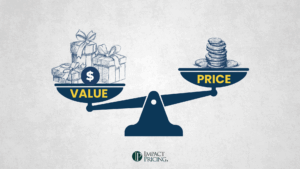
Price is the tradeoff. Value is the reason.
Every buying decision is an exchange. Buyers trade money for value. A buyer gives up money to get something they believe is worth more than what they are giving up. When that belief is strong, price fades into the background. When it is weak, price becomes the focal point.
This is why price dominates conversations even when it doesn’t explain decisions. Price is visible, numeric, and easy to argue about. Value is inferred.
Business leaders often experience this as inconsistency. One buyer accepts the price without hesitation. Another pushes back hard. The instinct is to search for pricing errors or market anomalies. But the variation usually has less to do with the number and more to do with how the trade is perceived.
If the buyer can clearly justify the trade, price stops feeling risky. If they cannot, even a modest price can feel uncomfortable.
This is why lowering the price “works” so often. Reducing the price reduces the sacrifice. It makes the trade easier to accept without requiring the buyer to fully understand or believe in the value. That doesn’t mean the original price was wrong. It means the value was not sufficiently clear or credible to support it.
Discounting compensates for uncertainty. It does not create value.
This distinction matters because it changes how leaders diagnose problems. If price is the reason, the solution is tactical. Adjust the number. Offer a concession. Run a promotion. But if price is the tradeoff, the real work happens earlier.
It happens in how the company understands what buyers care about. In how offerings are structured to reflect that understanding. In how value is communicated in a way buyers recognize and trust.
When those pieces are in place, price becomes easier to defend. Not because it is lower, but because it makes sense in the context of the trade.
Business leaders who treat price as the reason for lost deals end up trapped in endless negotiation. Leaders who treat price as the tradeoff focus on helping buyers see why the exchange is worth making.
The number doesn’t drive the decision. It reveals it.
Share your comments on the LinkedIn post.
Now, go make an impact!
 Tags: b2b sales, business leadership, buyer decision making, pricing, pricing strategy, revenue growth, value proposition